
CIPP Liner Resin Cure Log Growth & Automation: Killing the $20,000 Pipe Rejection Tax

Automation Edge Intel
Trade Automation Experts
Trenchless sewer rehabilitation is a high-margin game, until a municipal inspector rejects a 150-foot run because of a missing line on a paper log sheet.
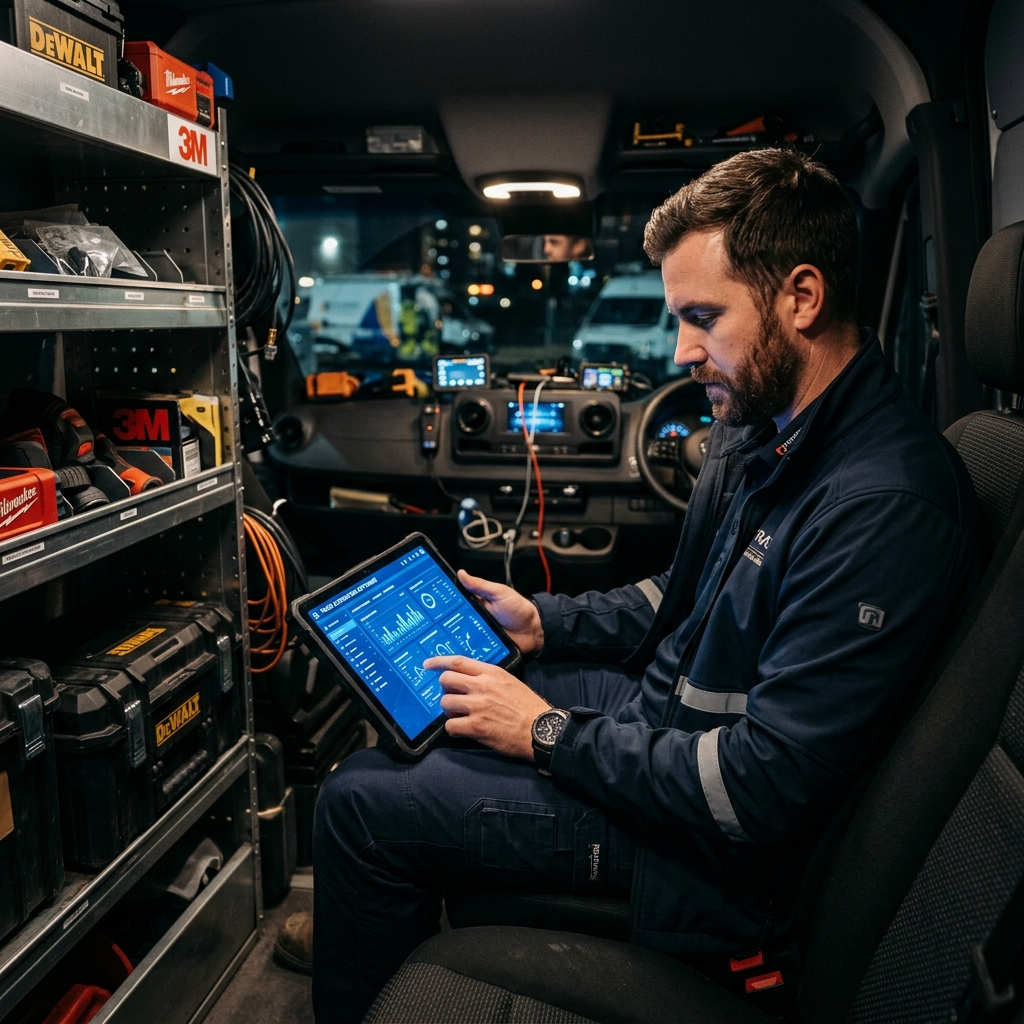

The Operating System for Commercial Empires.
A 10-truck fleet saves avg. $15,000/year in fuel alone using AI route density.
During Cured-In-Place Pipe (CIPP) lining, the exothermic reaction is everything. To comply with ASTM F1216 or ASTM F2019 standards, you must log resin cure temperatures and pressures at exact intervals. If your crew fails to log a single 15-minute step during the cook or cool-down cycle, you face the ultimate profit killer: a rejected municipal liner.
The cost of that single admin error? Over $20,000 in unbilled excavation, structural re-lining, and wasted crew hours. This is the truck trap in its purest form—where field negligence wipes out an entire week of business net margin.
The $20,000 Paper Logging Leak
Most trenchless contractors rely on field techs to write cure temperatures on clipboard sheets or manually type them into mobile devices. But field conditions are chaotic. Burners act up, hoses leak, and technicians get distracted. A single missed recording window means your post-construction submittal package is incomplete.
Municipalities are tightening enforcement. If the paper trail does not prove the resin maintained the proper temperature for the designated soak time, they will not pay. You are forced to perform a costly re-installation or resort to open-cut excavation to repair a pipe you already "fixed."
By connecting live telemetry directly to your core operating platform, you protect your margin. You can review top software integrations in our Operator’s Guide to see how to align your field systems.
The Field-Tested Fix: Automated CIPP Sensor Sync
Instead of hoping your technicians execute manual log sheets, we automate the raw telemetry. By using Make as your operational glue, you can bridge live Bluetooth or cellular sensor logs directly into your customer database.
This process requires no manual typing, no paper, and no delay. It turns a compliance vulnerability into a hands-off, bulletproof asset. This approach matches the rigor of other site mitigations, such as automating your Clean Fill Manifest Automation to eliminate dispatch leaks.
Here is how the system handles the heavy lifting:
- Continuous Capture: Remote temperature probes at the exhaust manifold broadcast live curing telemetry.
- Threshold Validation: The system automatically evaluates if the temperature meets the chemical manufacturer's specifications.
- Automated Job Syncing: Verified data points populate your active job profiles in ServiceTitan instantly, generating an airtight ASTM compliance PDF upon job completion.
The Sensor Webhook node acts as the listening post, instantly ingesting live curing data from cellular temperature manifolds in the field. Next, the ASTM Filter Gate parses the temperature against your specific resin specifications and holding-time minimums, filtering out standard noise. The ServiceTitan Log node automatically appends the verified, time-stamped reading to the active customer job card. Simultaneously, if curing temperatures drop below the chemical threshold, the Alert Router triggers immediate emergency SMS alerts to the supervisor's phone, allowing them to adjust the steam boiler before the liner is ruined.
Implementation Path
Two Ways to Deploy This
You do not need to understand webhooks or API modules to fix this leak. Pick the path that matches how you operate.
Path 1 — Build It Yourself
Sign up for Make, follow the blueprint above, and connect your field software. No code required — just drag, drop, and connect the modules shown in the diagram.
Start with Make.com →Path 2 — Hire a Pro (Recommended for Non-Technical Operators)
Don't want to touch the tech? Hire a vetted Make.com automation specialist to build this exact workflow for you. Hand them this article as the build spec — they will know exactly what to wire up.
Hire a Make.com Expert on Fiverr →Running a larger operation with multi-system integrations? Browse Make.com specialists on Upwork for bigger builds.
Escaping the Truck Trap
As an operator, you cannot afford to spend your days reviewing raw telemetry logs or chasing technicians for missing paperwork. When you build automated systems to handle compliance, you remove yourself from the active workflow. You graduate from a technician in a truck to an executive running an automated enterprise.
Standardizing these compliance bridges guarantees high-margin municipal sign-offs without requiring your physical presence on-site. Protect your net margin, secure your payouts, and scale your trenchless operation with absolute confidence.
Route leads and follow-up through GoHighLevel for CRM, SMS, and booking pipelines — then automate the handoffs with Make.
Verified Automation Stack





Built for 8-Figure Scale
Used by elite operators with GoHighLevel, Make, and ServiceTitan to automate dispatch, voice triage, and invoice routing.
Intelligence Audit: The GoHighLevel + ServiceTitan Edge
For contractors looking to move from a lifestyle business to a scalable empire, GoHighLevel handles CRM, SMS, and booking pipelines while ServiceTitan powers enterprise dispatch at scale. Together they optimize your profit margins.
- Smart Dispatch: Uses historical technician conversion rates to put your best sellers on the highest-value leads.
- Marketing Pro: Automatically tracks every dollar of ad spend to a closed invoice, giving you real-time ROI.
- Pricebook Pro: Standardizes your pricing across the fleet to ensure you never underquote a job again.
ANALYTICS SNAPSHOT:
- Compliance Violations: -95%
- Admin Time Reduction: -70%
- Application Error Rate: -90%
Contractor Fleet Fuel Savings ROI
At the current US average of $3.99/gal, a 10-truck contractor fleet (work trucks) spends approximately $49,838/year on fuel. AI-driven route density reduces that by 15%, saving your operation $7,476+ per year—every year, automatically.
Related Intelligence
Read NextEmergency Pack-Out Inventory Automation: Killing the $9,500 Missing Item Claim Leak
Lateral Launch CCTV Video Log Automation: Killing the $12,500 Retainage Release Lockout
Police Rotation SLA Log Automation: Killing the $14,000 Suspension Leak
Stay ahead of the curve.
Join 15,000+ independent contractors getting the daily edge on automation.